

How to Keep Charcuterie Fresh: Safe Storage and Serving Tips
A fresh charcuterie board starts with knowing what can be prepared ahead and what should wait until just before serving. If you’re wondering how to keep charcuterie fresh, focus on careful chilling, keeping ingredients covered and tracking how long perishable foods are out of the refrigerator.
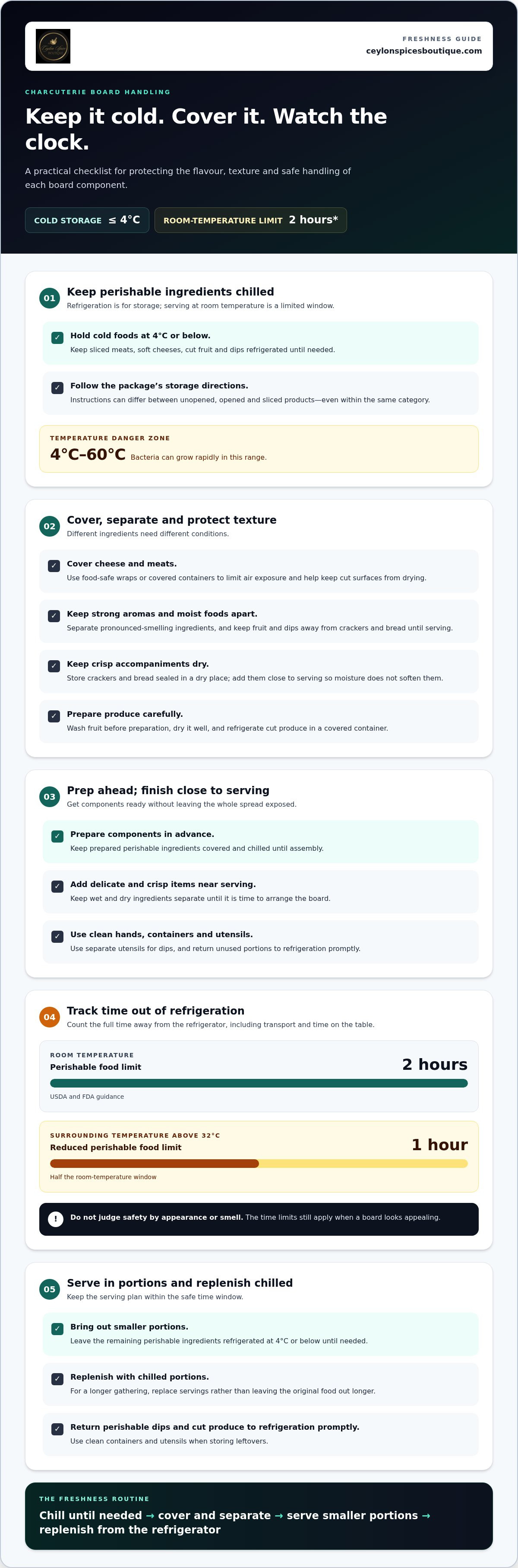
Warm conditions can quickly affect delicate cheeses, sliced meats and fresh fruit. You can prepare many details ahead without sacrificing appearance or flavour: keep perishable ingredients chilled at 4°C or below, then bring them out in smaller portions. When the surrounding temperature is above 32°C, USDA guidance limits how long perishable food should remain out to one hour.
This guide explains how to store each component, when to assemble the board and how to replenish it during a longer gathering. With a little planning, crisp accompaniments stay appealing and safe handling remains part of the plan.
Key Takeaways
- Learn how to keep charcuterie fresh by storing ingredients according to their texture, moisture and serving needs.
- Prepare components ahead, but leave delicate finishing touches until closer to serving.
- Keep food chilled during transport and setup, then serve in smaller portions and replenish as needed.
- Cover and separate cheeses, meats, fruit and accompaniments to help preserve their flavour and appearance.
- A ready-arranged grazing board can simplify hosting, but it still needs attentive handling.
How to Keep Charcuterie Fresh: Why Time and Temperature Matter
A board is fresh when its ingredients are safe to eat and still have the flavour and texture you expect. Cheese should retain its character, sliced meats should stay supple rather than dry, fruit should look lively, and crackers should remain crisp. The art of What is Charcuterie? brings together foods with different storage needs, so one approach won’t suit every component.
For perishable items such as sliced cured meats, soft cheeses, cut fruit and dips, time and temperature go hand in hand. USDA guidance identifies 4°C to 60°C as the temperature danger zone, where bacteria can grow rapidly, and recommends keeping cold foods at 4°C or below. Refrigeration is for storage; serving at room temperature is a limited window, not a substitute for chilling.
What affects freshness on a charcuterie board?
Air exposure can dry the cut surfaces of cheese and meat, affecting their texture and flavour. Cover prepared portions to limit exposure, and keep ingredients separate when strong aromas could transfer. Moisture presents a different challenge: juicy fruit, dips and other wet additions can soften crackers or bread if they touch. Wash produce before preparation, dry it well, and keep it apart from crisp accompaniments until serving.
Why warm conditions change the serving plan
A board may move from a cool refrigerator into a warm room, outdoor gathering or vehicle. That transition matters: perishable food should not be left at room temperature for more than two hours, according to USDA and FDA guidance. If the surrounding temperature is above 32°C, reduce that limit to one hour. Count the time from when food leaves refrigeration, including transport and time on the table.
Plan around that window instead of relying on appearance or smell to judge safety. Keep perishable ingredients refrigerated at 4°C or below until needed, and bring out a portion suited to the occasion rather than setting out everything at once. If the gathering continues, replace servings with chilled portions instead of leaving the original food out longer. These limits apply even when a board still looks appealing.
Different ingredients also need different care. Whole, uncut dry-cured meats and hard, aged cheeses may be more stable than sliced meats or soft cheeses. Once cut or sliced, follow the package’s storage directions and keep perishable portions chilled. Dips and cut fruit need particular attention because moisture and handling can affect quality and safety. Keep presentation in mind, but don’t let it override safe handling.
How to Store Cheese, Cured Meats and Accompaniments
Good storage protects both the board’s appearance and its ingredients. Refrigerate perishable foods until assembly, and cover and separate components to protect their flavours and textures. Set the refrigerator to 4°C or below, and use clean, food-safe containers or wraps rather than leaving food exposed on a shelf.
Storage directions can differ between products, even within the same category. An unopened package may have different instructions from one that has been opened or sliced, so check the label and follow its refrigeration and use guidance. Don’t assume a food is safe for a particular number of days because it looks or smells fine. For broader handling advice, consult the Mayo Clinic Health System’s Food Safety Guidelines for Charcuterie Boards.
Keep cheese and cured meats covered and chilled
Wrap cheese and meats in suitable food-safe material or place them in covered containers to limit air exposure and help prevent cut surfaces from drying. Store strong-smelling cheeses apart from milder ingredients, and keep meats separate from foods that could absorb their aromas. Follow package directions for both unopened and opened products. Once cheese is cut or meat is sliced, don’t rely on guidance meant for the sealed package. Clean hands and utensils help protect stored portions.
- Keep each ingredient in its own covered container when practical, especially if it has a pronounced aroma or may release moisture.
- Use clean utensils to portion cheese and meats, and return unused amounts to the refrigerator promptly.
- After opening, check the label for specific storage or use instructions instead of applying one shelf-life rule to every product.
Protect fruit, dips and crisp accompaniments
Fresh fruit and moist additions need different care from dry crackers or bread. Refrigerate cut produce and dips in covered containers, apart from crisp items until it’s time to arrange the board. Pat washed fruit dry before storing so excess surface moisture doesn’t collect. Use separate utensils for dips to avoid transferring crumbs or other ingredients into them.
Keep crackers and bread sealed in a dry place, away from fruit, dips and other moisture. Condensation can soften a crisp accompaniment and diminish the contrast of textures that makes a board inviting. Add these elements close to serving, and leave them in their packaging or a dry container until then.
After serving, return perishable dips and cut produce to refrigeration promptly, using clean containers and utensils. If an item has been left out, follow authoritative food-safety time guidance rather than judging it by appearance alone. Separating wet and dry ingredients is a practical part of how to keep charcuterie fresh, helping preserve crispness alongside the more delicate qualities of cheese, meats and fruit.
For a ready-arranged option that makes hosting simpler, explore Ceylon Spice Boutique’s curated charcuterie boards. Keep perishable ingredients chilled until serving.
Should You Assemble a Charcuterie Board Ahead of Time?
Preparing ahead can make hosting feel composed rather than rushed, but it doesn’t mean every part of the board should be assembled early. Consider the ingredients, their package instructions and whether the finished arrangement can be covered and kept chilled. For how to keep charcuterie fresh, treat make-ahead assembly as a way to save time, not permission to extend storage or serving limits.
Choose between a fully assembled board and component prep
A complete board can work if it can be covered, refrigerated promptly and stored according to the directions for its most perishable ingredients. It gives you a ready composition, but crackers, bread and cut fruit can lose their ideal texture if they sit together. Preparing components in separate covered containers takes a little more final arranging, but gives you better control over moisture, aromas and crispness.
Choose the approach that best protects the ingredients. Follow each package’s storage directions, particularly after opening, and keep perishable foods at 4°C or below. If you’re unsure whether an item can be prepared ahead, leave it chilled in its original packaging or a clean, covered container until closer to serving.
A calm preparation timeline for hosts
Work backwards from serving, separating tasks that can be done early from those best left until the last moment. This timeline is flexible; package directions and safe temperature limits always take priority.
- In advance: Set out the serving board, small dishes, utensils and non-perishable accompaniments. Arrange the serving area so chilled ingredients can move quickly from the refrigerator to the table.
- As preparation begins: Wash and dry produce, portion ingredients with clean utensils, then cover and refrigerate cut fruit, cheese, meats and dips. Keep crackers and bread sealed and dry.
- Shortly before guests arrive: Arrange the chilled components, leaving space between moist foods and crisp items. Add crackers, bread and delicate garnishes close to serving so they retain their texture and appearance.
- During service: Bring out only what suits the occasion, keeping reserve portions refrigerated. Perishable food should not remain at room temperature for more than two hours, or one hour when the surrounding temperature is above 32°C.
Keep a fully assembled board covered and refrigerated until it’s needed. Hold back delicate additions if they might soften or wilt. For a longer gathering, top up with a fresh chilled portion rather than setting out the entire supply at once. The serving window begins when food leaves refrigeration, so include preparation and time on the table in your plan.
There isn’t one universal number of hours that suits every ingredient or opened package. Use the label’s directions and authoritative food-safety advice for the specific food, and discard items if safe handling is uncertain. Advance organisation and final assembly can help the board look effortless without leaving freshness to chance.
How to Keep Charcuterie Cool During Transport and Serving
A chilled board can warm quickly between the refrigerator, the car and the table, especially during a gathering in warm weather. Planning ahead helps preserve its presentation while keeping perishable ingredients within safe temperature limits. Insulated carriers and cold packs can help during transport, but they don’t replace checking the food’s temperature or tracking how long it remains out.
Move the board from refrigeration to the table
Keep perishable ingredients refrigerated for as much of the journey as possible. If transporting a prepared board, secure it in a clean insulated carrier with suitable cold packs, and avoid leaving it in a warm vehicle or direct sunlight. On arrival, move it promptly to the serving area or back into refrigeration until guests are ready.
- Chill before departure. Keep the board or its perishable components at 4°C or below until it’s time to leave. Pack ingredients separately if that makes them easier to keep cold.
- Prepare the carrier. Use a clean insulated container and cold packs where suitable. Secure the food so it won’t shift, and keep crisp accompaniments dry and away from damp items.
- Travel directly. Minimise time in transit, and never leave the food in a parked car. A vehicle can become much warmer than the surrounding air.
- Check before serving. Where possible, use a food thermometer to check that chilled ingredients remain at 4°C or below. If they’ve warmed, don’t assume cold packs or an attractive appearance mean they’re still safely chilled.
- Set out a portion. Place a manageable amount on the table and return the rest to refrigeration. Replenish with chilled reserves as needed.
Serve in portions and manage leftovers
Smaller servings create an inviting display and make it easier to manage how long food stays outside refrigeration. Use a clean serving utensil for each dip or accompaniment, and keep backup portions covered and chilled. Cold packs help during the journey, but they aren’t a substitute for monitoring temperature once food is being served.
Follow USDA and FDA guidance: keep perishable foods at 4°C or below and don’t leave them at room temperature for more than two hours. If the surrounding temperature is above 32°C, reduce the maximum display time to one hour. Track time from when food leaves refrigeration, including transport and setup. Adding food to the same platter doesn’t reset the clock for what is already there.
If you can’t establish how long an item has been out or whether it stayed properly chilled, discard it rather than relying on smell or appearance. For a ready-arranged board that simplifies hosting, explore Ceylon Spice Boutique’s charcuterie boards, then keep it chilled until serving and replenish thoughtfully.
Make Freshness Effortless with a Ceylon Spice Boutique Board
A simple routine makes a welcoming board easier to enjoy: chill perishable ingredients, cover them until needed, transport them carefully and serve a manageable portion at a time. A ready-arranged board can reduce preparation on the day, but it still needs attentive handling in warm conditions.
A ready-to-serve option for considered hosting
Ceylon Spice Boutique’s fully arranged trays bring together premium cheeses, artisanal meats, fresh fruit and gourmet accompaniments in a composed presentation, helping you spend less time arranging and more time welcoming guests. The trays are delivered fresh for orders placed before 9 AM. On arrival, keep perishable ingredients chilled until serving, and handle the board with the same care you would give one assembled at home.
Convenience doesn’t replace food-safety basics. Keep the tray covered and refrigerated until it’s time to serve, then set out an amount suited to the gathering. If guests will be enjoying the board over an extended period, keep reserves chilled and replenish in portions. This helps maintain an inviting presentation while limiting how long perishable items sit out. Arrange crisp accompaniments with care so their texture stays distinct from fruit and other moist ingredients.
Choose a board that suits the occasion
For a generous shared centrepiece, The Ultimate Gourmet Grazing Board offers a curated choice for the table. For a more intimate gathering, the Charcuterie Board for 1-2 Persons is another option. Both provide a ready-arranged presentation, while your serving plan still accounts for chilling, careful handling and the conditions at your event.
Whether you choose a board for a quiet evening or a larger gathering, a few thoughtful steps help protect flavour and appearance from the moment it arrives. Keep it chilled until service, avoid leaving it in warm surroundings, and replenish from refrigerated portions rather than setting everything out at once. These habits are the practical heart of how to keep charcuterie fresh, bringing good presentation and safe handling together.
For your next gathering, browse Ceylon Spice Boutique’s curated boards and choose a centrepiece that suits the occasion.
Set the Table for an Unhurried Gathering
Let the board help set the mood for your occasion. Think about where guests will gather, how they’ll share the spread and the kind of welcome you want to create. A considered centrepiece can make a simple get-together feel special, leaving you free to enjoy the conversation instead of attending to every detail.
Knowing how to keep charcuterie fresh also means planning for ease: choose a presentation that suits your gathering, then give yourself room to host with confidence. Ceylon Spice Boutique’s curated boards offer an elegant starting point for a table designed to bring people together.
Explore Ceylon Spice Boutique’s curated charcuterie boards and find a fitting centrepiece for your next occasion. Thoughtful planning lets you welcome guests warmly and enjoy the moment alongside them.
Frequently Asked Questions
Can you freeze a charcuterie board?
Freezing a complete charcuterie board is generally not ideal because fresh fruit, soft cheeses and assembled accompaniments can change texture after thawing. If a packaged ingredient is labelled as suitable for freezing, freeze it separately and follow its storage directions. Thaw it safely in the refrigerator, then assess its quality before serving. Freezing won’t make food safe again if it was handled or stored unsafely beforehand.
How long can opened deli meat stay in the refrigerator?
There isn’t one safe refrigerator duration for every opened deli meat, since the product, packaging and handling all matter. Keep it chilled and follow the manufacturer’s storage and use-by instructions. For guidance specific to the type of meat, consult an authoritative food-safety resource such as the USDA’s FoodKeeper. If the package gives no clear direction, don’t use smell or appearance alone to decide whether the meat is safe to eat.
Can I keep charcuterie in its original packaging after opening?
Yes, if the package’s instructions allow it and the packaging can be resealed securely. Otherwise, transfer the food to a clean, food-safe container with a tight-fitting lid and refrigerate it. Keep ready-to-eat items protected from possible contamination, using separate containers and clean utensils. Marking the date you opened the package can help you follow its stated use-by guidance without guessing how long it has been stored.
How do I keep crackers crisp on a charcuterie board?
Store crackers in a dry, airtight container, away from fruit, dips, cheese and other moist foods. Put out only the amount you expect guests to eat soon, keeping the rest sealed until you replenish the board. If crackers soften, they may have lost their appealing crunch even if other items still look inviting. For the best contrast of textures, arrange crackers just before serving rather than storing them on the board.
Should I wash fruit before storing it for a charcuterie board?
Yes. Wash fruit under clean running water before preparing it, and don’t use soap or household cleaners. Dry it thoroughly with a clean cloth or paper towel so excess moisture doesn’t affect nearby ingredients. Keep cut fruit covered and refrigerated, then add it to the board close to serving. This helps preserve its appearance and limits moisture transferring to crackers, bread or other crisp accompaniments.
Can I reuse food that has been on a charcuterie board?
Only consider keeping leftovers if you know they stayed within safe time and temperature guidance and weren’t exposed to guest handling or contamination. Use clean utensils to separate them from the board, cover them and return them to refrigeration promptly. If you’re unsure how long the food was out, conditions were warm, or serving utensils were shared, discard it. A fresh appearance cannot confirm that food is safe.


